Doodle coats can look deceptively fluffy on top while tangles are tightening close to the skin. That is why a quick brush over the surface often is not enough.
The useful habit is not “brush your Doodle every day no matter what.” It is learning how to check the coat properly, focus on the areas that mat fastest and keep grooming sessions short enough that your dog can cope with them comfortably.
The 10-minute Doodle grooming routine
- Check the high-friction areas with your fingers.
- Part the coat so you can see the skin.
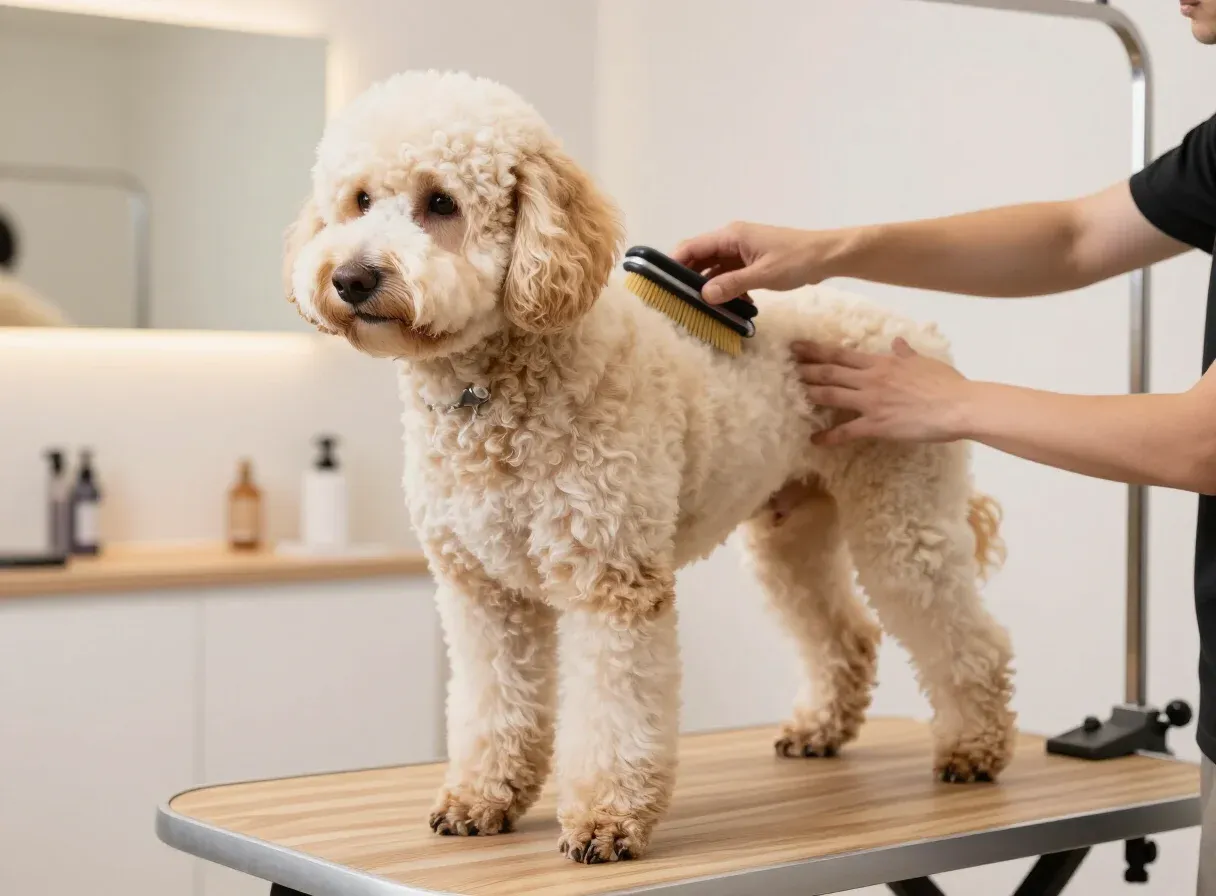
- Line-brush one small section at a time.
- Follow with a metal comb.
- Spend the final minute on handling practice.
If you find a tight mat, do not spend the entire session tugging at it. Severe matting can be painful and may need professional clipping rather than home dematting.
What you need
For most Doodles, the basic kit is surprisingly small:
- A slicker brush appropriate for the coat length
- A sturdy metal comb
- A few small treats
- Optional detangling spray if the coat benefits from it
You do not need a drawer full of tools. The slicker does the brushing; the comb tells you whether the brushing actually reached through the coat.
If you are unsure what kind of coat you are working with, start with our guide to Doodle fleece, wool and hair coats.
Step 1: check the places that mat first
Run your hands through the coat before you pick up the brush. Pay particular attention to:
- Behind the ears
- Under the collar or harness
- Armpits
- Chest
- Belly
- Inside the back legs
- Tail base
- Feet and between the toes
These areas combine movement, friction and moisture, so they often tangle before the more obvious parts of the coat.
Step 2: line-brush instead of skimming the top
Line-brushing simply means working through the coat in small sections.
Use one hand to lift the coat so you can see a narrow line of skin. Brush that small section gently from near the skin outward, then move your hand slightly and repeat.
The goal is not to scrape the skin. You are separating the coat layer by layer rather than polishing the fluffy surface.
Step 3: comb-check your work
This is the part many owners skip.
After brushing a section, run the metal comb through it from the skin outward. If the comb catches, there is still a tangle there. Go back with the slicker and work gently rather than forcing the comb through.
If the comb moves smoothly through the coat, that section is actually finished.
Step 4: keep the session cooperative
Grooming is easier when your dog is not fighting you.
Use food. Pause often. Let your dog change position. Practise touching feet, lifting ears and gently handling the face before those things become necessary at the groomer.
If your puppy can tolerate two calm minutes today, two calm minutes is enough. Build duration over time instead of pinning them in place until the job is finished.
Can you really prevent matting in 10 minutes a day?
Sometimes. It depends heavily on coat type, coat length, weather, activity and how long you keep the coat.
A short daily check is excellent for catching tangles early, but some Doodles need longer sessions or more frequent professional grooming. Others with easier coats may need much less.
That is why I would use “10 minutes” as a routine, not a promise. The goal is regular maintenance, not racing a timer.
| Coat situation | What I would do |
|---|---|
| Short, easy-maintenance coat | Regular comb checks and brief brushing as needed |
| Longer fleece or wool coat | Frequent line-brushing plus thorough comb checks |
| Wet or muddy coat | Dry fully, then check friction areas carefully |
| Already matted | Assess whether clipping is kinder than prolonged dematting |
What causes Doodle matting?
- Friction from collars, harnesses and movement
- Moisture from swimming, rain or bathing
- Loose coat becoming trapped in curls
- Brushing only the outer layer
- Long intervals between thorough grooming
- Coat changes during puppy-to-adult transition
The puppy coat transition can surprise owners because a coat that was previously easy can suddenly become much more prone to tangling.
When should a groomer step in?
If a mat is tight against the skin, covers a large area, or your dog is becoming distressed while you work on it, stop. Prolonged pulling and dematting can be painful and can damage the skin.
A shorter haircut is not a failure. Sometimes clipping is the kinder option, then you can restart the maintenance routine from a manageable coat length.
For a broader schedule, see how often a Doodle really needs grooming.
A realistic weekly grooming plan
- Daily or near-daily: quick hand-check of ears, armpits, chest and harness areas
- Several times a week: line-brush and comb-check sections of the coat
- After swimming or heavy rain: dry thoroughly and check high-friction areas
- Regularly: professional groom based on coat length and individual needs
The best schedule is the one that keeps the comb moving smoothly through your dog’s coat without turning grooming into a wrestling match.
Frequently asked questions
Should I brush my Doodle when the coat is wet?
I would usually dry the coat first, then brush and comb it thoroughly. Wet curls can tighten around tangles as they dry, so post-bath and post-swim checks matter.
Why does my Doodle look brushed but still have mats?
Because the brush may only be moving through the outer layer. Use line-brushing and always follow with a metal comb to check from the skin outward.
Is shaving a matted Doodle cruel?
No. If the coat is tightly matted, clipping can be much kinder than trying to pull apart painful mats for a long period. The priority is the dog’s comfort, not preserving coat length.