Bringing home a Doodle puppy has a funny way of making sensible people buy seventeen toys, three beds, two kinds of shampoo and a gadget that promises to teach a puppy to ring a bell when they need to pee.
You genuinely do not need most of it.
A new Doodle needs a safe place to settle, equipment that fits properly, food that agrees with them, a very small grooming kit, and a simple way for you to reward the behaviour you want to see again. Everything else can come later.
The five things I would buy before bringing home a Doodle puppy
- A safe sleep and settling setup
- A well-fitted harness and ordinary fixed-length lead
- The food they are already eating, plus a few feeding/enrichment basics
- A slicker brush and metal comb that actually reach through the coat
- Small, high-value training treats and a treat pouch
That is the core list. You can absolutely make life more elaborate later, but these five categories cover most of what matters during the first few weeks.
1. A safe place to sleep and settle
Your puppy does not need an Instagram-worthy nursery. They need somewhere predictable, comfortable and boring enough to sleep.
For many families that means a crate, puppy pen, baby-gated area, or a combination of the three. I care much more about how the space is used than whether you choose a particular brand. It should never be somewhere your puppy is shoved when they are “bad.” It is simply a management tool and a place to rest.
If you plan to use a crate, introduce it gradually rather than expecting a brand-new puppy to happily spend hours alone in it on night one. Our Doodle crate-training guide walks through that process in more detail.
I would also have a washable bed or blanket, but I would not spend a fortune on one yet. Puppies chew, dig, have accidents and occasionally decide that expensive bedding is an excellent snack.
Useful extras for the settling area
- A baby gate or exercise pen
- A washable mat or inexpensive bed
- A safe food-stuffable toy or chew
- A water bowl that is easy to clean
When your puppy first arrives, think less about “training” and more about helping them feel safe, sleep enough and learn the rhythm of the household. If your puppy is coming home soon, read what to do during the first 72 hours with a Doodle puppy before you start planning an ambitious schedule.
2. A well-fitted harness and normal lead
Doodle puppies can change shape ridiculously quickly, so I would not buy five expensive harnesses in advance. Buy one adjustable harness that fits the puppy you actually have, check the fit frequently, and replace it when necessary.
The harness should allow the shoulders to move freely, sit securely enough that your puppy cannot back out of it, and avoid rubbing behind the front legs. Doodles can also be surprisingly deep through the chest, especially as they mature, which makes fit more important than simply buying the size suggested by body weight.
We have a separate guide to harnesses for deep-chested Doodles.
Pair it with a simple fixed-length lead. You do not need complicated walking equipment to begin teaching loose-lead skills. In fact, the equipment matters much less than rewarding your puppy for staying connected to you and gradually building their ability to walk around distractions. If pulling has already appeared, see why Doodles pull on the lead and how to work on it.
3. The food they are already eating
The first few days in a new home are not the moment I would choose for an unnecessary food overhaul.
Ask the breeder, rescue or previous caregiver exactly what your puppy has been eating and start there. A sudden change of home, routine, water, sleep and food all at once is a lot for a young digestive system.
If you decide to change foods later, do it thoughtfully and transition gradually. Our broader guide on what a Doodle should eat covers the factors worth considering.
You do not need a fancy bowl
A sturdy, washable bowl is fine. But I rarely feed every meal from a bowl when I have a puppy in the house. Some of that daily food can be used for training, scatter feeding, sniffing games or simple enrichment.
For puppies that inhale food, a slow feeder can be useful, but it should make meals calmer rather than frustrating. We cover the options in our guide to slow feeders and puzzle bowls.
4. A slicker brush and a metal comb
This is the Doodle-specific item I would not postpone.
Doodle coats vary enormously. Some are relatively easy to maintain; others mat astonishingly fast. The fluffy surface of the coat can look perfectly tidy while tangles are forming closer to the skin.
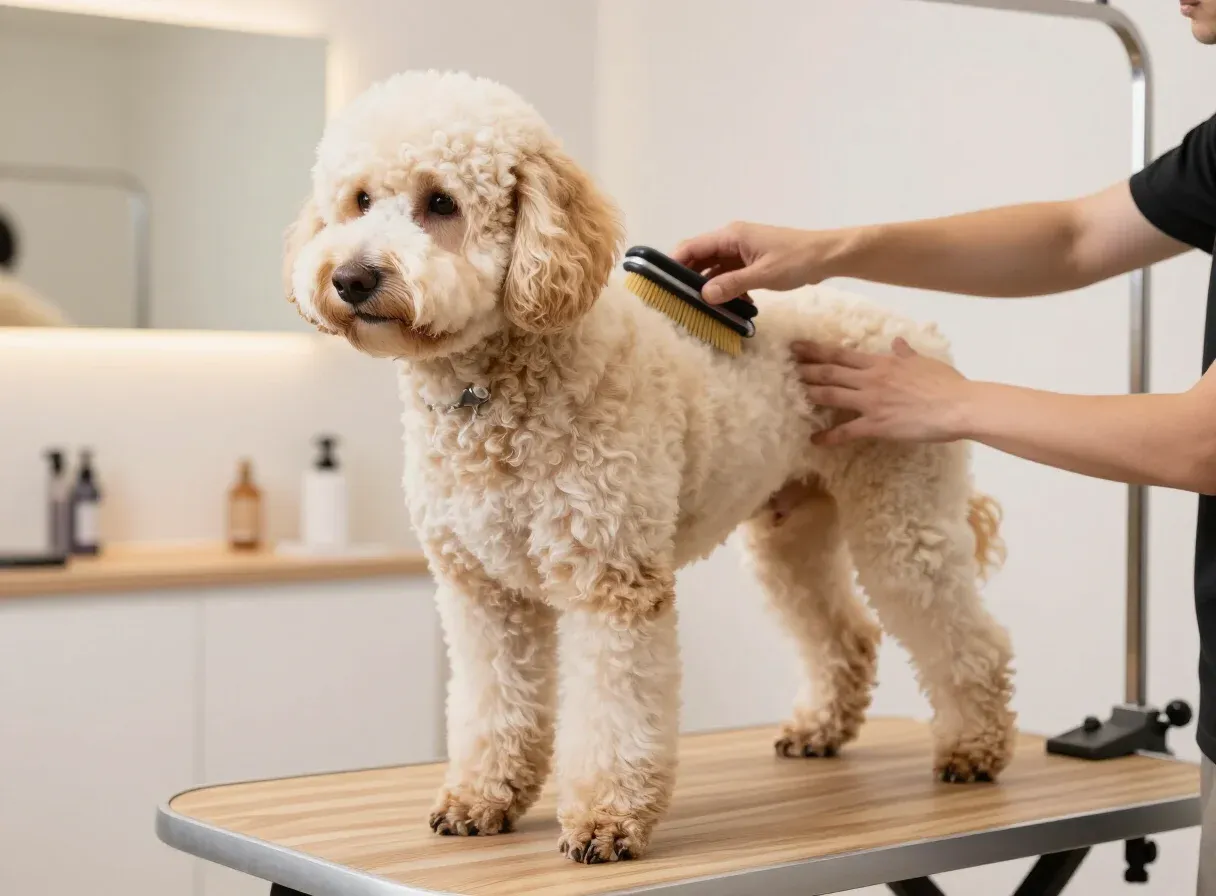
At minimum, I want a suitable slicker brush and a metal comb. The brush loosens and separates the coat; the comb tells you whether you have actually worked all the way through it. If the comb cannot pass easily from the skin outward, the job is not finished.
Start grooming practice before your puppy “needs” a proper groom. Keep the sessions tiny, use food, and teach the puppy that being brushed, handled and having their feet touched predicts good things. Five calm minutes is much more useful than wrestling with a puppy for half an hour once they are already tangled.
These guides will help you build the routine:
- The 10-minute daily Doodle groom
- How often a Doodle really needs grooming
- Doodle coat types: fleece, wool and hair
5. Training treats and somewhere to put them
If I could persuade every new puppy owner to carry one thing around the house, it would be a pocketful of tiny treats.
Puppies repeat behaviours that work for them. If coming when called, checking in with you, putting four feet on the floor, going outside to toilet and settling quietly regularly earn something worthwhile, you get far more opportunities to build good habits before frustrating ones become established.
The treats do not need to be enormous or exotic. They need to be small, easy to swallow and valuable enough for the environment you are working in. For easy training at home, some puppies will happily work for part of their normal food. Harder situations may need something better.
A cheap treat pouch is useful because rewards are only useful if you can actually reach them while the good behaviour is happening.
Once your puppy is ready for more freedom, a long line is another useful training tool. It lets you practise recall without gambling on your puppy making a perfect decision every time. See our Doodle recall guide for how to progress safely.
Things new Doodle owners can usually skip
This is where puppy shopping gets expensive very quickly. I would not rush to buy:
- Multiple expensive beds before you know whether your puppy destroys bedding
- A huge wardrobe of harnesses your puppy may outgrow in weeks
- Dozens of toys that all do essentially the same thing
- Complicated “anti-pulling” or correction equipment instead of teaching the walking behaviour you want
- Large quantities of one chew or treat before you know your puppy actually likes it
- Every grooming tool marketed specifically at Doodles
Buy for the puppy in front of you. Add things when they solve a real problem.
What matters more than the shopping list
The first weeks with a puppy are mostly about sleep, safety, toilet training, gentle exposure to the world and building trust. Your puppy does not need to master twenty commands before breakfast.
Socialisation also does not mean forcing your puppy to meet every dog and person they see. Good socialisation is about helping them learn that the world is safe and manageable. Our guide to what actually matters during the puppy socialisation window explains that in more detail.
And if your puppy appears to have turned into a tiny crocodile by day three, that is also extremely normal. Start with our guide to surviving Doodle puppy biting.
New Doodle puppy essentials: the short version
| Essential | What to look for | Why it matters |
|---|---|---|
| Safe sleep area | Crate, pen or gated space used positively | Helps with rest and household management |
| Harness and lead | Secure, adjustable fit with free shoulder movement | Safe everyday walking and training |
| Food | Start with the puppy’s current diet | Avoids unnecessary digestive disruption |
| Brush and comb | Slicker plus metal comb | Prevents small tangles becoming painful mats |
| Training rewards | Small treats and a treat pouch | Makes reinforcing good behaviour easy |
Frequently asked questions
Do I need everything before my Doodle puppy comes home?
No. Have the genuine basics ready, then learn what your individual puppy needs. You will make better purchasing decisions after living with them for a week than you will while guessing beforehand.
Should I buy an adult-size harness so my puppy can grow into it?
No. A harness that is too large can rub, restrict movement or allow a frightened puppy to escape. Use equipment that fits now and expect to resize or replace it as your puppy grows.
What grooming tools does a Doodle puppy actually need?
For most Doodles, a good slicker brush and metal comb are the useful starting point. The exact coat will determine whether you need additional tools later.
What should I focus on during the first week?
Prioritise sleep, toilet opportunities, bonding, gentle handling, simple reinforcement and calm exposure to the new environment. The goal is not to cram an entire obedience syllabus into the first seven days.