The first 72 hours with a Doodle puppy are not the time to prove how much training you can accomplish. Your puppy has just lost almost everything familiar: littermates, smells, routines, sleeping arrangements and the people they knew.
Your job for the first three days is much simpler: help them feel safe, get enough sleep, toilet in the right place often enough to start a pattern, and begin building trust.
Before your puppy arrives
- Set up one main puppy-safe area
- Have the current food ready
- Choose the outdoor toilet spot
- Set up a crate, pen or sleep area if you plan to use one
- Put away cables, shoes and anything you do not want chewed
- Have a few toys, chews and tiny training treats available
You do not need a house full of puppy products. Our five new-Doodle essentials covers the genuinely useful basics.
Day 1: keep the world small
Bring your puppy home, take them to the toilet area, then let them explore a limited part of the house rather than immediately giving access to every room.
Keep visitors to a minimum. Your puppy does not need to meet the entire extended family on the first afternoon.
- Offer water
- Feed the familiar diet
- Take frequent toilet trips
- Allow plenty of naps
- Keep play short
- Let the puppy approach new people rather than being passed around
The first night
Some puppies sleep surprisingly well. Others are upset about being alone for the first time in their lives.
I prefer to keep a young puppy close enough that I can respond to genuine distress and toilet needs rather than putting them in a distant room and leaving them to scream.
If you are using a crate, it should already be paired with good things and introduced gradually. Our force-free crate training guide explains the process.
Night-time toilet trips should be boring: outside, toilet, quiet praise, back to bed. This is not 2 a.m. playtime.
Day 2: start the routine, not a boot camp
By day two, begin creating a predictable rhythm around waking, toileting, food, short play, very short training and sleep.
| Moment | What to do |
|---|---|
| After waking | Go straight outside to toilet |
| After eating | Offer another toilet opportunity |
| After energetic play | Toilet, then help the puppy settle |
| After a nap | Outside again |
| Before bed | Quiet toilet trip and settle |
Puppies are terrible at telling you in advance that they are about to pee. Prevention is easier than reacting after an accident.
Day 3: begin tiny pieces of training
Training can start immediately, but think in seconds rather than formal sessions.
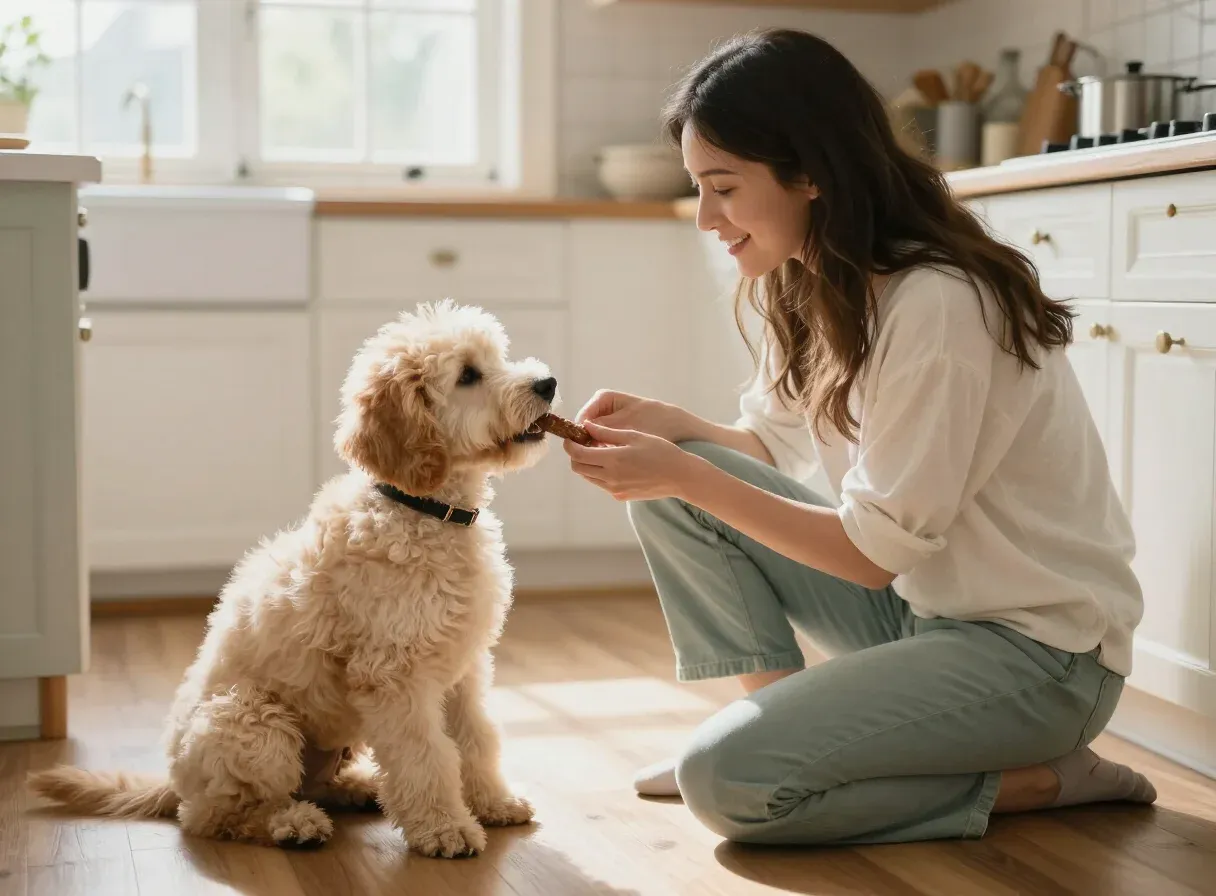
- Say the puppy’s name and reward orientation toward you
- Reward following you
- Reward four feet on the floor
- Reward calm handling
- Introduce a recall cue over tiny distances
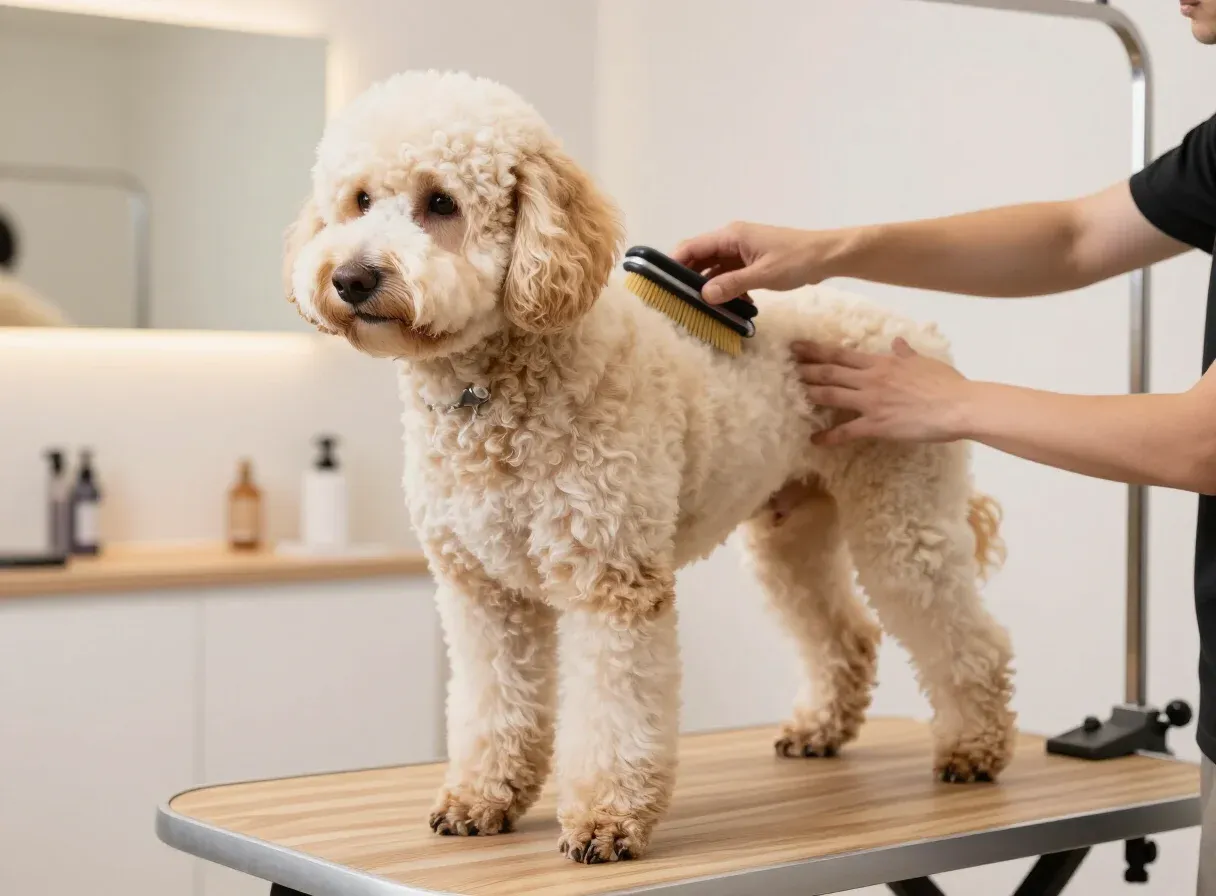
- Pair grooming tools with food
If your puppy begins biting everything that moves, that is normal too. Use our Doodle puppy biting guide before assuming you have brought home a tiny monster.
How much should a new puppy sleep?
A lot. Young puppies often need most of the day broken up by short periods of eating, toileting, play and exploration.
Overtired puppies often look hyper rather than sleepy. If your puppy suddenly becomes frantic, bitey and unable to focus, more stimulation may be the last thing they need.
What about socialisation?
Yes, early socialisation matters. No, that does not mean dragging your puppy through ten crowded places in the first weekend.
Let the first few days be calm. You can introduce safe, positive experiences in small doses. Our guide to what actually matters before 16 weeks explains how to do that without overwhelming your puppy.
What not to worry about in the first 72 hours
- Perfect obedience
- Perfect crate duration
- Walking beautifully on a lead
- Meeting every friend and neighbour
- A rigid minute-by-minute schedule
- Teaching a dozen cues
Security and routine come first. Skills can be built once your puppy has had a chance to land.
When to call your veterinarian
Contact your veterinarian if your puppy is repeatedly vomiting, has significant or persistent diarrhoea, seems unusually lethargic, refuses food and water, has difficulty breathing, or shows any other sign that feels medically concerning. A little stress can affect appetite and stools, but very young puppies can deteriorate quickly.
Your first-72-hours checklist
- Keep the environment calm
- Use the puppy’s familiar food initially
- Take them out to toilet very frequently
- Protect sleep
- Keep interactions positive and short
- Start tiny reinforcement-based lessons
- Do not overwhelm them with visitors
- Book or confirm the first veterinary appointment
Frequently asked questions
Should I let my puppy cry on the first night?
I would not deliberately leave a very young puppy in prolonged distress. Keep them close, meet toilet needs and build independence gradually.
Can friends visit immediately?
They can, but there is no benefit to turning the first days into a parade. A small number of calm, positive interactions is plenty.
When should training start?
Immediately, if you define training as rewarding useful behaviour. Keep it tiny, fun and woven into normal life.