Socialisation is not a puppy bucket list. Your Doodle does not need to meet 100 people, greet every dog or visit every possible location before 16 weeks old.
The goal is to help your puppy learn that the world is safe, predictable and manageable. Quality matters more than quantity, and observation counts. A puppy can learn about a dog, child, bus or vacuum cleaner without being forced to interact with it.
Why the early socialisation period matters
Young puppies are especially receptive to learning about the world around them. Positive early experiences can help build resilience, while frightening or overwhelming experiences can also leave a strong impression.
That is why “more exposure” is not automatically better. The puppy’s emotional response is the part that matters.
What good socialisation looks like
- Your puppy notices something new
- They remain able to eat, explore or disengage
- You allow distance
- You pair the experience with good things
- The puppy is not trapped or forced to interact
- You stop or move away if the puppy becomes worried
What should a Doodle puppy experience?
Think in broad categories rather than a giant checklist.
| Category | Examples |
|---|---|
| People | Different ages, appearances, movement styles and voices |
| Surfaces | Grass, concrete, carpet, gravel, metal, wood |
| Sounds | Traffic, household appliances, doors, distant construction |
| Handling | Paws, ears, mouth, brushing, collar and harness |
| Movement | Bikes, strollers, joggers, vehicles |
| Animals | Calm, appropriate dogs and safe observation of other species |
| Places | Car rides, quiet streets, veterinary clinic, groomer environment |
Your puppy does not need to greet everyone
In fact, teaching a puppy that every person and dog is available for greeting can create frustration later.
Let your puppy watch people and dogs from a comfortable distance while you reward calm observation and check-ins with you. Neutrality is a fantastic social skill.
Watch body language, not your checklist
If your puppy is backing away, freezing, refusing food, trying to hide, repeatedly escaping, or becoming frantic, the experience is too difficult.
Create distance. Let them recover. You do not need to prove they can “get over it.”
Socialisation and vaccination
There can be tension between disease prevention and the developmental value of early socialisation. Talk to your veterinarian about local disease risk and safe ways to expose your puppy before the vaccination series is complete.
Depending on local risk, options may include carrying your puppy, using a clean blanket or stroller, visiting friends with healthy vaccinated dogs, or observing environments from a safe distance.
Do not forget grooming socialisation
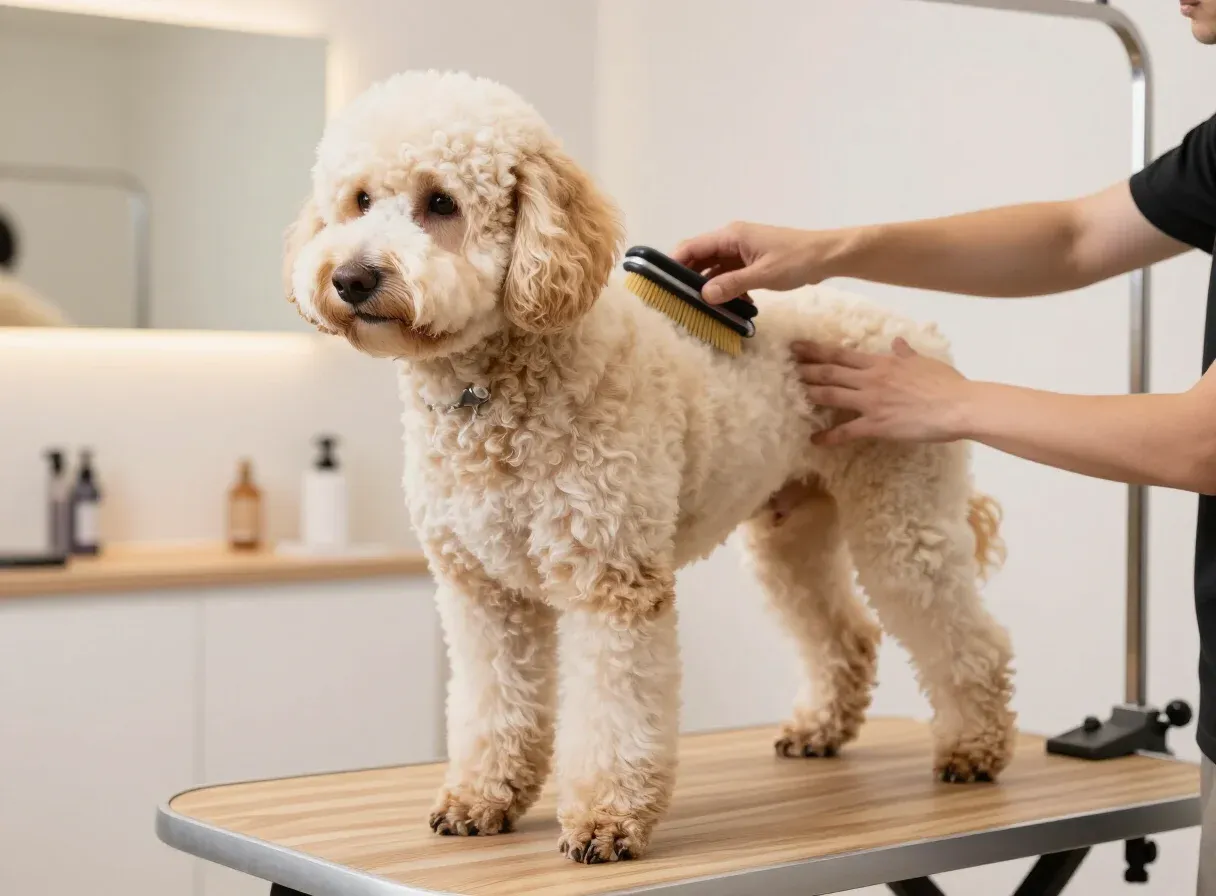
Doodles will usually need substantial coat care throughout life, so grooming is part of socialisation.
- Touch paws briefly, then reward
- Lift an ear, reward, release
- Show the brush, reward
- Brush one stroke, reward
- Practise standing on a non-slip surface
- Introduce dryer sounds from a comfortable distance
Build this before the coat is matted and grooming becomes urgent. Our daily Doodle grooming routine gives you a practical structure.
What about puppy classes?
A well-run puppy class can be useful, but the class should not be an uncontrolled puppy free-for-all. Look for small groups, reward-based teaching, thoughtful management and instructors who do not force frightened puppies into interaction.
Common socialisation mistakes
- Forcing the puppy toward something they fear
- Allowing every stranger to pick the puppy up
- Using dog parks as puppy socialisation
- Overloading several difficult experiences into one day
- Assuming exposure equals positive learning
- Ignoring recovery and sleep
If your puppy has only just arrived home, start with the first 72 hours with your Doodle puppy and keep experiences small.
A simple weekly socialisation plan
- Choose two or three new experiences for the week.
- Make each one easy enough that your puppy can stay relaxed.
- Pair the experience with food, play or calm exploration.
- Include familiar easy experiences too.
- Give the puppy quiet recovery time afterward.
You are building confidence, not collecting exposures.
Frequently asked questions
Is 16 weeks a hard deadline?
No. Dogs continue learning throughout life. Early development matters, but missing one experience before a particular birthday does not doom your puppy.
Should my puppy meet lots of dogs?
No. A few safe, socially appropriate dogs are more valuable than dozens of chaotic greetings.
What if my puppy is scared?
Increase distance, lower the intensity and let the puppy observe without pressure. If fear is persistent or worsening, work with a qualified reward-based professional.