Doodles can be awkward to fit in harnesses. Many are narrow through the neck, deep through the chest and surprisingly long through the ribcage, so a harness that matches the weight chart can still sit badly on the actual dog.
The answer is not a magic “Doodle harness.” It is choosing a shape with enough adjustment for your dog’s proportions and then checking how it sits while the dog is moving.
What a well-fitted Doodle harness should do
- Sit clear of the throat
- Allow the shoulder blades and upper forelimbs to move freely
- Stay behind the front legs without rubbing the armpits
- Fit securely around the ribcage
- Stay centred when the dog turns or changes pace
- Be difficult for the dog to back out of
- Allow you to slide fingers under the straps without obvious looseness
Why deep-chested Doodles are harder to fit
A deep chest creates a bigger difference between the circumference behind the front legs and the narrower neck/shoulder area. Harnesses with limited adjustment may therefore fit one part of the dog and float around another.
Young Doodles also change shape rapidly. A harness that was excellent at five months may be sitting in the armpits or rotating around the chest a few weeks later.
Check fit frequently during growth rather than assuming the original adjustment is still correct.
The harness shapes I prefer
Y-front harnesses
A well-designed Y-front harness usually gives the front of the shoulder more freedom than a straight horizontal strap across the chest. The centre section sits down the breastbone while straps travel around rather than across the shoulder.
Shape alone does not guarantee good fit, but it is a useful starting point.
Harnesses with multiple adjustment points
For oddly proportioned dogs, adjustment matters. I like being able to change the neck area and chest independently rather than relying on one fixed opening.
Longer-bodied harnesses
If the girth strap repeatedly rides into the armpits, a harness with more distance between the front section and rib strap may fit better.
How to measure your Doodle for a harness
- Measure the widest part of the ribcage, usually a little behind the front legs.
- Measure the lower neck where the harness will actually sit, not high up where a collar sits.
- If the manufacturer provides a chest-length measurement, take that too.
- Compare your dog’s measurements with the specific brand’s size chart.
- If your dog sits between sizes, check which dimensions are adjustable before choosing.
Do not size by weight alone. Two 50-pound dogs can have completely different proportions.
The movement test: check fit while your dog walks
A harness can look perfect while the dog is standing still and become terrible as soon as they move.
- Walk your dog toward you and watch whether the front straps interfere with the shoulders.
- Walk away and check whether the harness rotates.
- Turn left and right to see whether the body stays centred.
- Check behind the front legs for rubbing.
- Apply gentle lead pressure in the direction your dog might pull and see whether the harness shifts toward the throat.
Signs the harness does not fit
| What you notice | Likely problem |
|---|---|
| Strap rubbing behind front legs | Girth strap sits too far forward or body section is too short |
| Harness rotates sideways | Too loose or proportions do not match the dog |
| Front strap crosses shoulder joint | Harness shape may restrict movement |
| Neck opening gaps widely | Neck adjustment is too large or not adjustable enough |
| Dog can reverse out | Fit is insecure; consider additional adjustment or a more escape-resistant design |
Front clip or back clip?
A back clip is simple and works well for dogs with established loose-lead skills. A front attachment can give you another point of control during training, but it should not twist the harness across the dog’s body or be used to wrench the dog sideways.
A dual-clip harness can be useful when paired with a double-ended lead because it distributes handling across two attachment points.
Whatever attachment you choose, the harness itself does not teach loose-lead walking. If pulling is the problem, use our guide to teaching a Doodle to walk on a loose lead.
What I would avoid
- Harnesses that sit directly across the shoulder joint
- Very little adjustment on a deep-chested dog
- Straps jammed tightly into the armpits
- Oversized harnesses bought for a puppy to “grow into”
- Using a poorly fitted harness because the size chart says it should fit
- Relying on tightening or discomfort to stop pulling
For puppies: expect to replace the harness
I would rather buy a reasonably priced harness that fits a puppy now than an expensive adult harness that is dangerously loose for three months.
Growth is especially fast during the first year, so check the fit every week or two. If you are preparing for a new puppy, this is one of the five items in our new Doodle puppy essentials list.
A quick fit checklist before every walk
- Neck opening secure
- Chest strap behind the armpits
- No twisted straps
- No obvious rubbing
- Shoulders moving freely
- Lead attachment secure
- Dog cannot easily reverse out
If your Doodle is an escape risk, consider a backup connection between harness and collar while you work on a more secure fit.
Frequently asked questions
How tight should a Doodle harness be?
Secure enough that it does not rotate or allow the dog to back out, but not so tight that straps dig into the skin or restrict movement. Finger rules are only rough guides; movement testing matters more.
Can a harness cause matting?
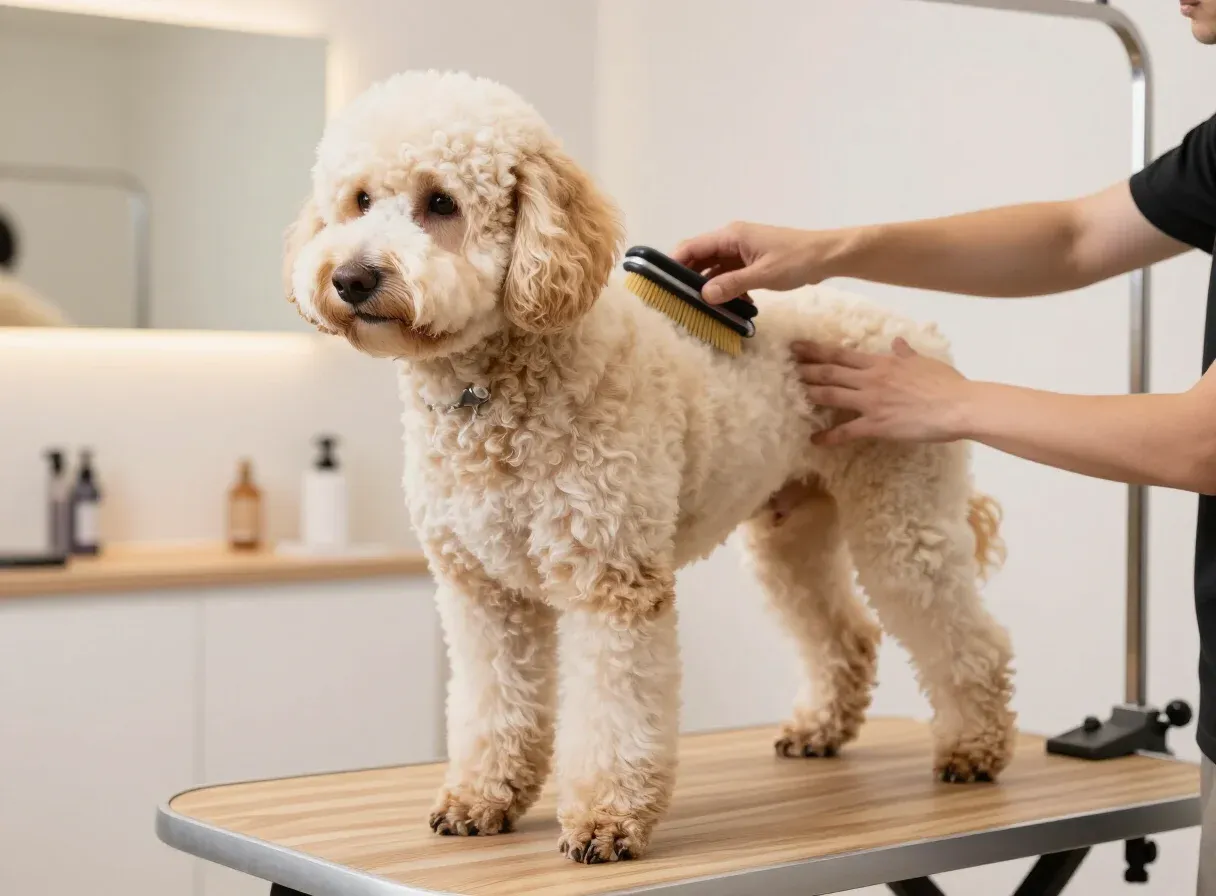
Yes. Friction under straps can contribute to tangles, especially on long coats. Remove the harness when it is not needed and check the coat under high-friction areas regularly. Our 10-minute grooming routine covers those spots.
Should a Doodle wear a harness all day?
I generally would not leave walking equipment on all day. Removing it at home reduces friction, prevents snagging and gives you a chance to check the skin and coat underneath.