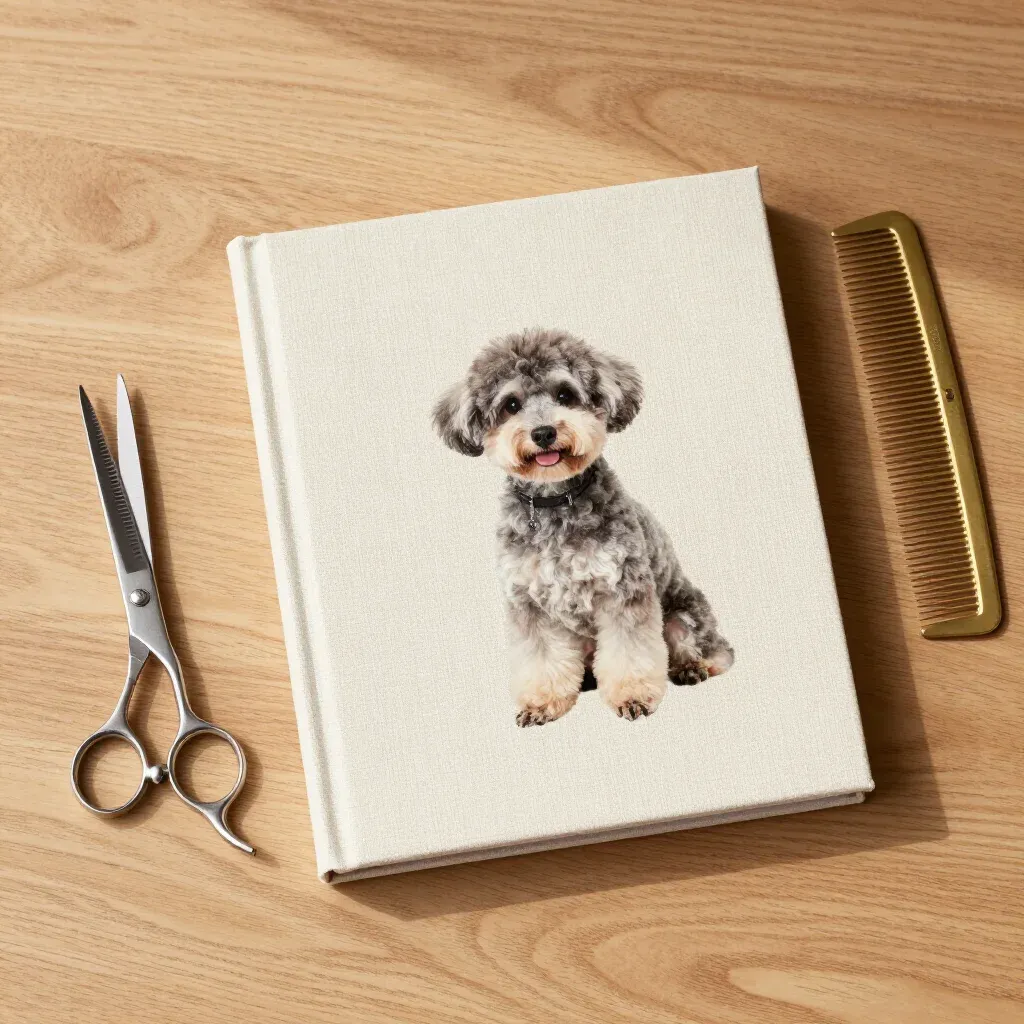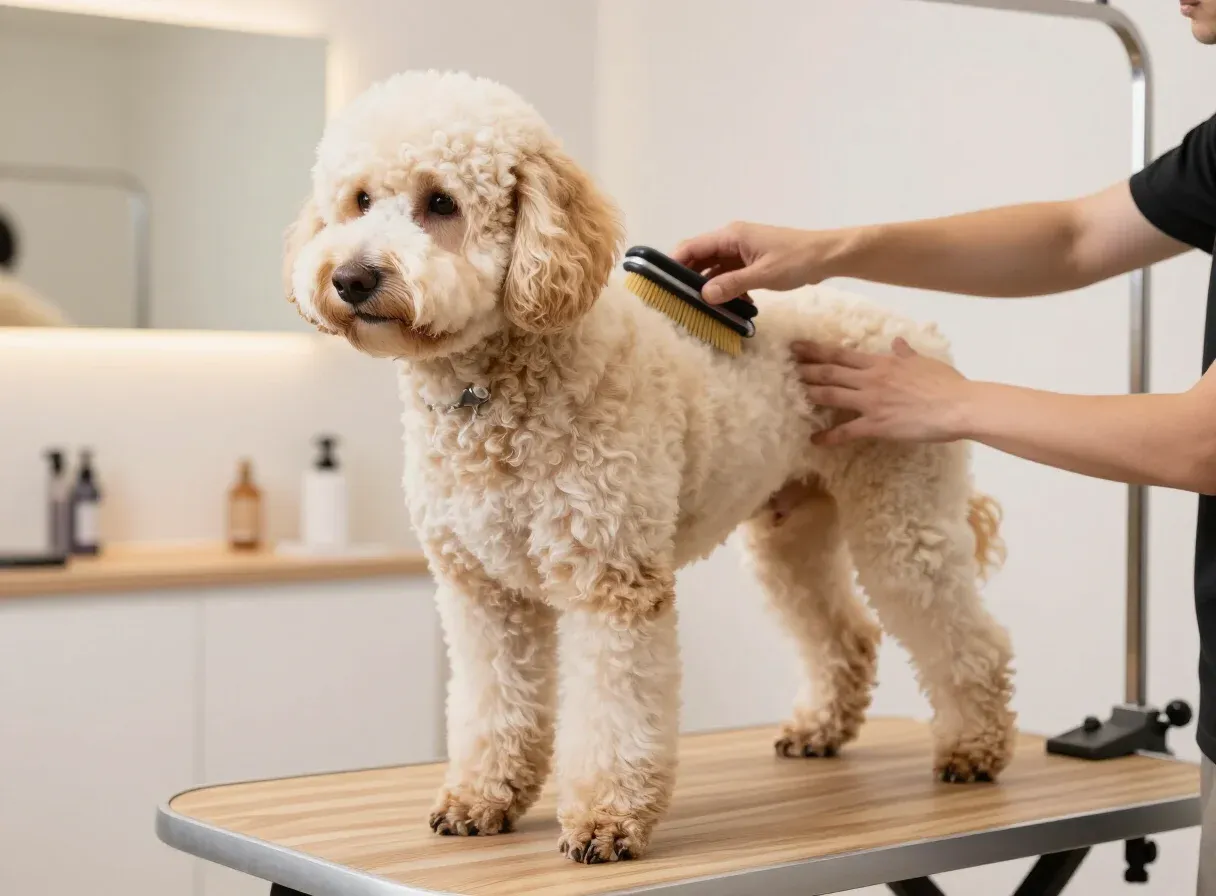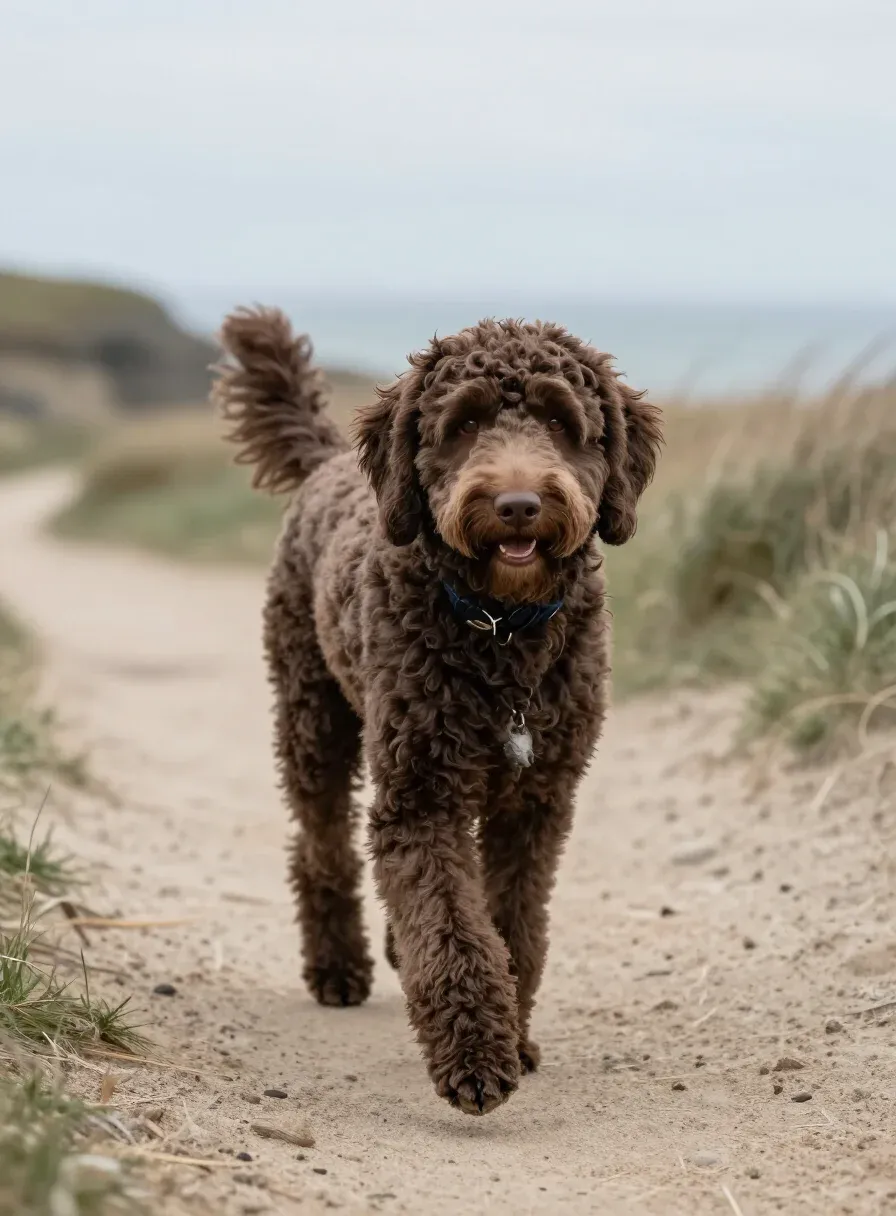
Doodle coats are not one predictable thing. Even puppies in the same litter can mature into noticeably different coats, and the soft puppy fluff you bring home may change substantially as the adult coat comes through.
“Fleece,” “wool” and “hair” are useful descriptive labels, but they are not guarantees about shedding, allergies or maintenance. What matters most is the coat your individual dog actually develops.
The three common Doodle coat descriptions
Fleece coat
Fleece coats are often described as soft, flowing and wavy to loosely curled. They can feel silky compared with denser wool coats, but they still vary enormously in thickness and tendency to mat.
Wool coat
Wool-type coats are usually denser and curlier. They may shed less visibly because loose hairs remain trapped in the coat, which also means regular brushing and combing becomes especially important.
Hair coat
Hair coats tend to resemble the straighter coat of the non-Poodle parent more closely. They may shed more noticeably and can be easier to maintain, although there are plenty of exceptions.
| Coat description | Typical texture | Common maintenance issue |
|---|---|---|
| Fleece | Soft, wavy to loose curl | Tangles under friction areas |
| Wool | Dense, curly | Loose hair trapped close to skin |
| Hair | Straighter or lightly wavy | More visible shedding |
Can you predict a Doodle puppy’s adult coat?
Only to a point. Coat genetics are complex, and puppy coats change. Facial furnishings, curl and texture can offer clues, but no one should promise that a young puppy will definitely mature into a particular maintenance level or shedding pattern.
If a breeder guarantees a completely non-shedding coat, treat that claim cautiously.
Do Doodles shed?
Some Doodles shed very little. Some shed considerably. Many fall somewhere in between.
A low-shedding coat can actually require more hands-on grooming because loose hair remains caught in the coat rather than falling onto the floor. That trapped hair contributes to tangles and mats if it is not brushed through properly.
Are Doodles hypoallergenic?
No dog can be guaranteed hypoallergenic. People can react to proteins found in dander, saliva and urine, not simply loose hair.
If allergies are a major concern in your household, spend time around the individual dog or similar adult dogs before making a commitment rather than relying on a coat label.
The puppy coat change is where grooming often gets harder
As the adult coat comes in, the texture and density can change and the two coat types may tangle together. Owners who had an easy-care puppy can suddenly find mats appearing quickly.
This is exactly when good brushing technique matters. Our 10-minute Doodle grooming routine explains line-brushing and comb checks step by step.
How coat type changes grooming needs
- Denser, curlier coats: usually need more frequent thorough brushing and professional grooming.
- Long coats: require more maintenance regardless of curl.
- Active outdoor dogs: pick up burrs, mud and moisture that increase tangling.
- Dogs wearing harnesses frequently: often mat under straps and around the chest.
There is no shame in choosing a shorter clip if that matches the amount of home maintenance you realistically want to do. Comfort matters more than keeping a particular fluffy look.
For scheduling, see how often a Doodle really needs grooming.
What grooming tools do you actually need?
- A suitable slicker brush
- A metal comb
- Optional detangling spray
- Regular access to a competent professional groomer
The comb is important because it tells you whether the brush reached through the entire coat. If the comb catches close to the skin, the section is not finished.
Frequently asked questions
Which Doodle coat is easiest to maintain?
Generally, shorter and less dense coats are easier than long, dense curly coats, but individual variation is huge. Coat length often matters as much as the label.
Can two puppies from the same litter have different coats?
Yes. Littermates can differ in curl, density, furnishings and shedding because they inherit different combinations of genes.
Does a curly coat mean no shedding?
No. Curl can be associated with less visible shedding in some dogs, but it is not a guarantee.